
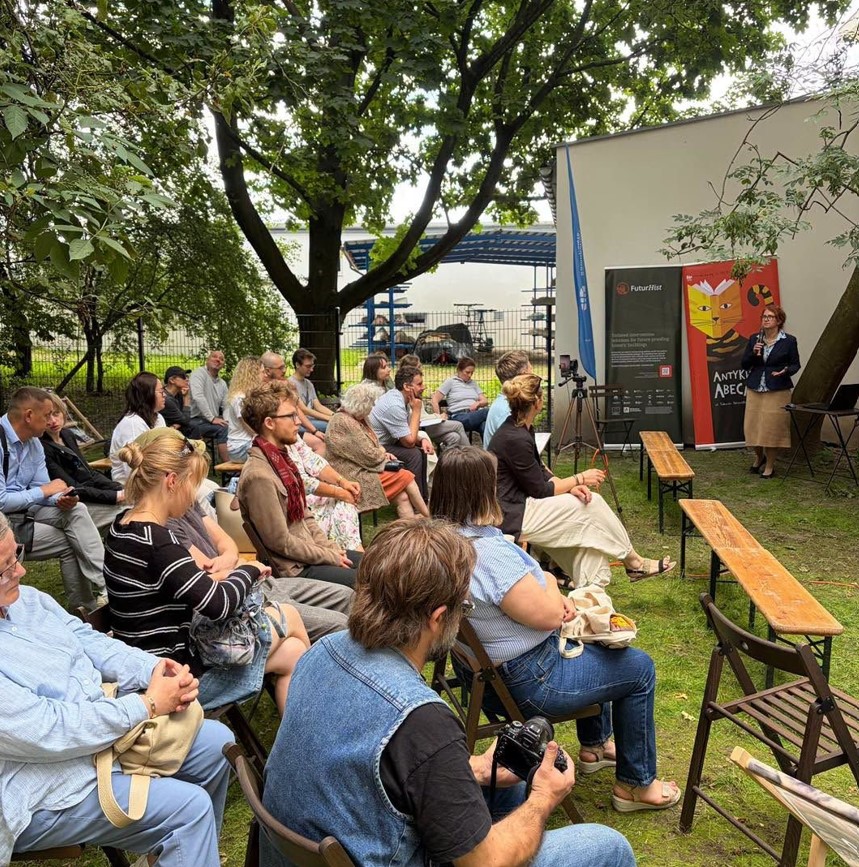
On Saturday, July 4, 2026, the courtyard of the historic tenement house at 18 Kościuszki Street in Kraków, which is one of our demonstration cases, became a vibrant hub for heritage and sustainability. The event gathered a large audience eager to explore architecture, historical preservation, and the practical application of natural building materials. This iconic building is well-known to locals and visitors alike as the home of the famous Abecadło (antiquarian bookstore).
The event kicked off with an engaging lecture series featuring prominent experts in the field:
- Monika Bogdanowska (Cracow University of Technology) delivered a thought-provoking presentation titled “Do historic buildings respond to contemporary climate change challenges?”. She analyzed the layout of the plot at Kościuszki 18, its building materials, and design choices to evaluate whether the concepts of past builders still hold up today or require serious modern modifications.
- Kinga Racoń-Leja (Cracow University of Technology) followed with her lecture, “The tenement house as the most common building typology from the turn of the 19th and 20th centuries in Cracow”, giving the audience a deeper understanding of local architectural heritage.
- Marcin Paradyż, Director of the Municipal Buildings Management in Kraków, concluded the session by detailing the specific renovation and modernization works planned for the Kościuszki 18 building under the FuturHist framework.
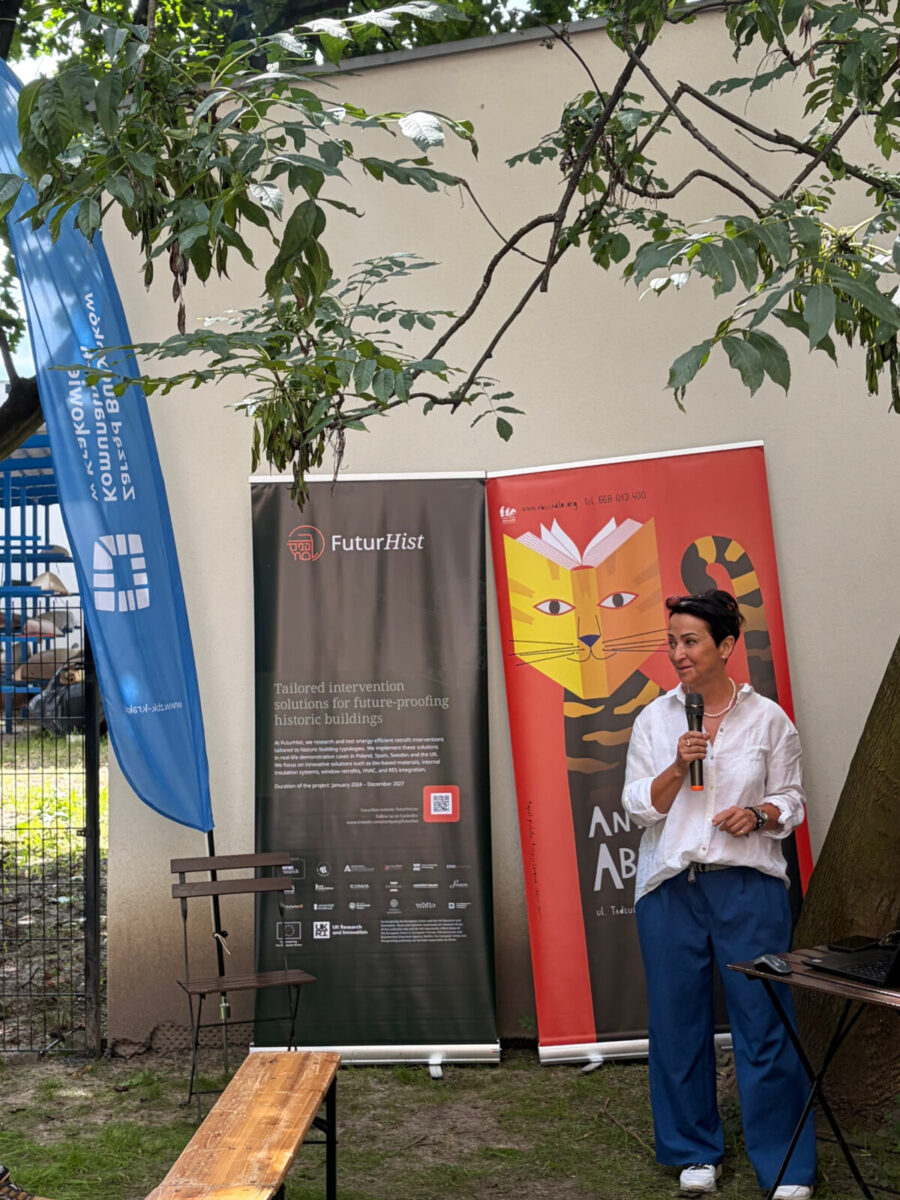
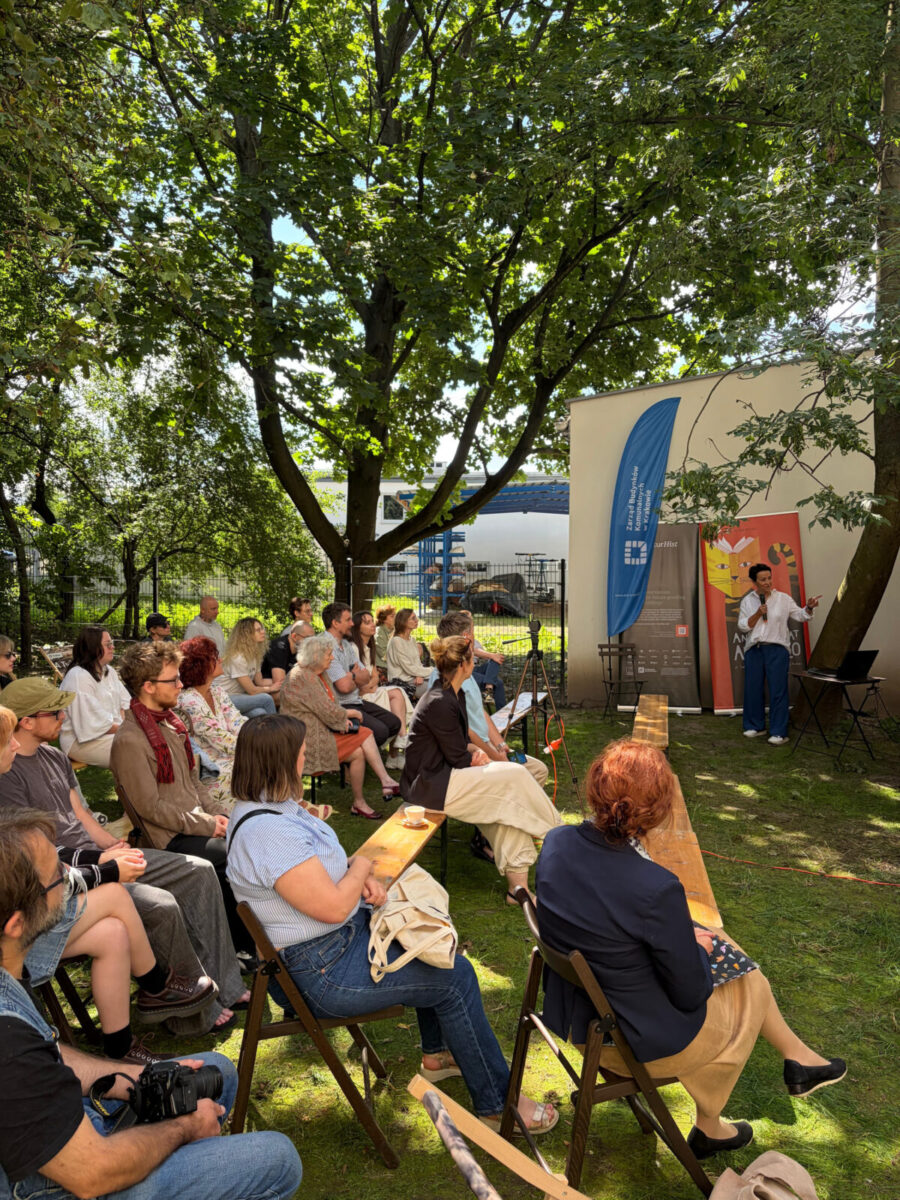
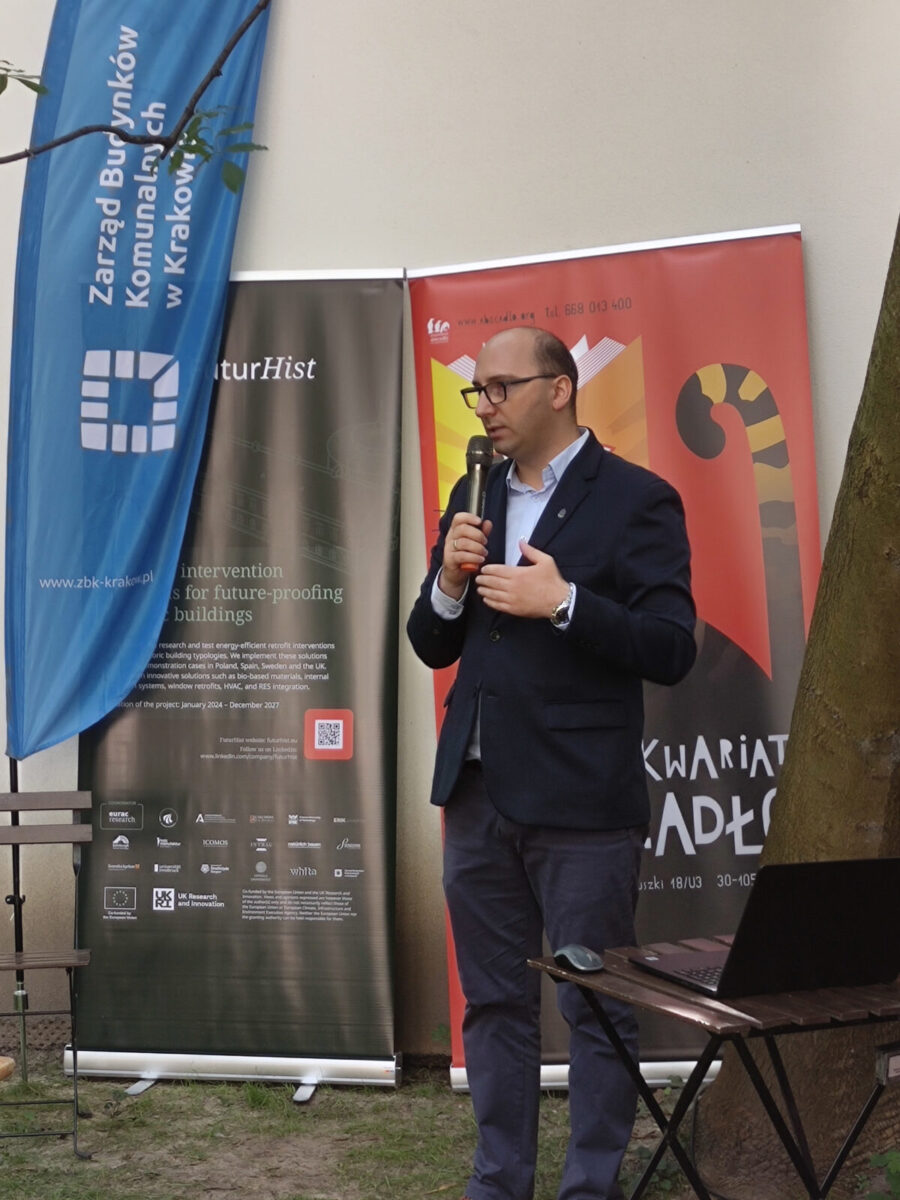
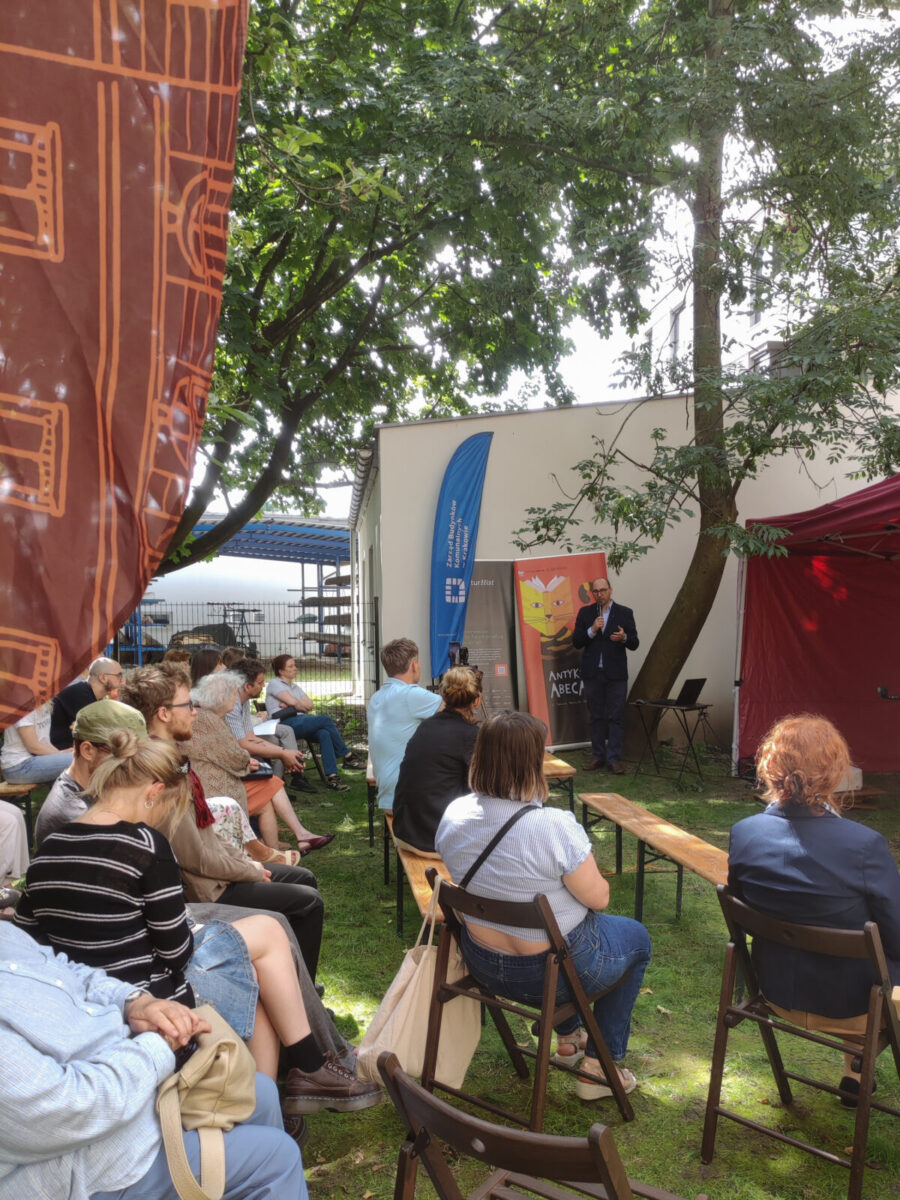
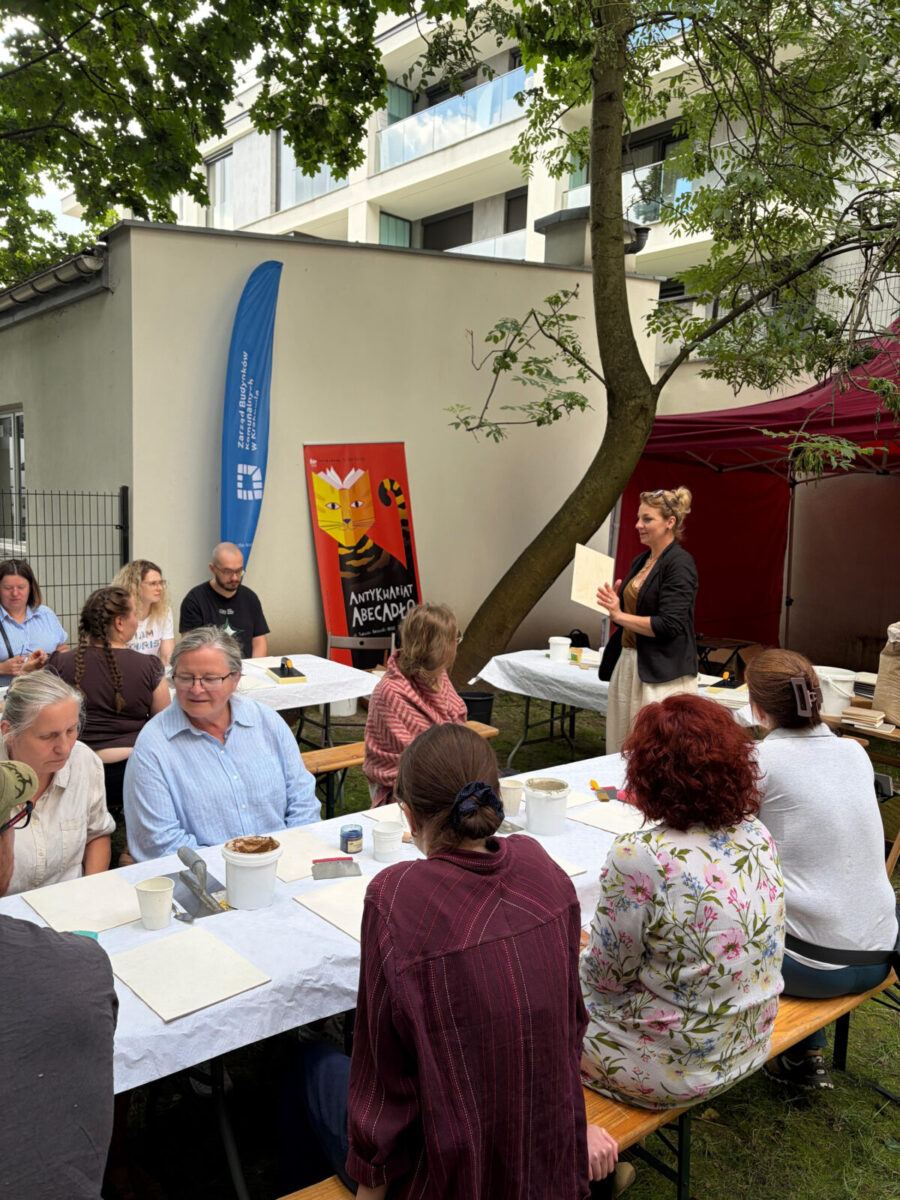
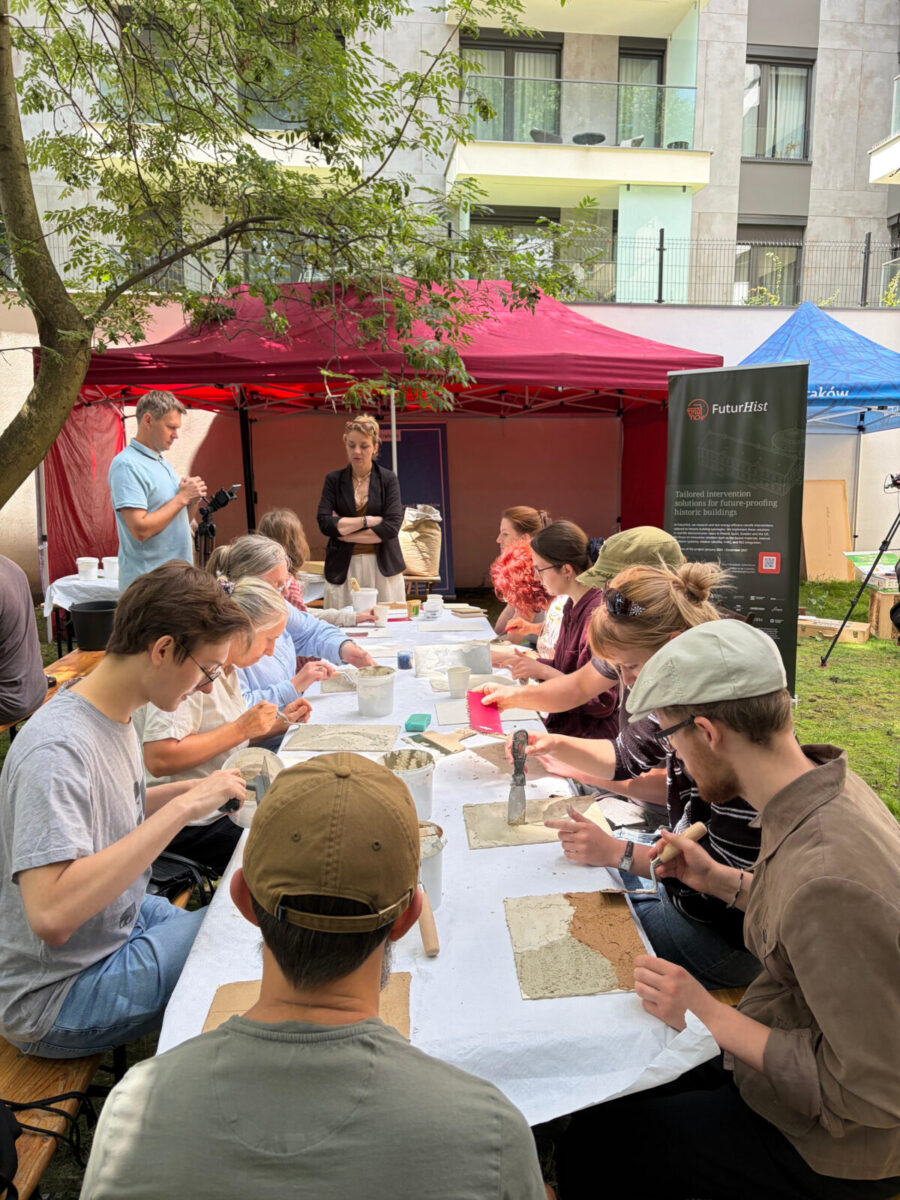
Photo: Zarząd Budynków Komunalnych w Krakowie
The highlight of the day’s practical segment was an immersive workshop dedicated to using natural materials in existing building renovations. Led by Ewa Czap, a renowned expert in natural building and clay plasters, the interactive session allowed participants to get their hands dirty and experience working with clay firsthand. Attendees discovered the ecological benefits, breathability, and versatility of this traditional material in modern renovations.
Check out the recording of the event.